Monday, 19 December 2022

Things to Remember before Buying an AC

If you're considering purchasing an air conditioner to survive the scorching heat of the summers easily, you need to do your homework so you can make an informed decision. The last thing you want for your home is a costly, improperly sized air conditioner that is unable to meet your cooling needs.

Here are some of the most important things that you should keep in mind when purchasing an air conditioner:


Type of Air Conditioner

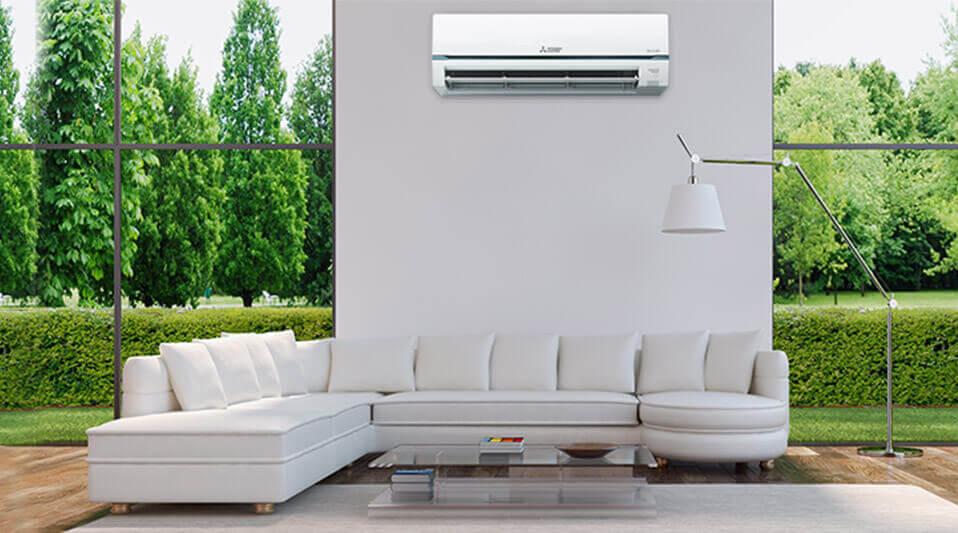
Split ACs, window ACs, package ACs, HVAC systems, VRF systems, etc. are some of the most popular types of air conditioners available in India today. Which type of AC you should buy will depend on several factors, like the expected usage, size of the room, your cooling requirements, available space, etc.

Cooling Capacity

The size of the air conditioner you want to buy depends on the size of the room and where in the house it is located. For your air conditioner to operate efficiently and have a long lifespan, it is crucial to choose the right capacity. The tonnage required for the AC is determined by taking the room's size, location, number of inhabitants, etc. into account.

Indoor Air Quality

When purchasing an AC, indoor air quality is a crucial factor to consider. The air quality of your home can be greatly improved by an AC with a decent filter. The air filters of the air conditioner assist in clearing the air of dust and bacteria and can also remove smoke and unpleasant smells. A good filter not only purifies the air, but it also prevents dust and other waste from getting to the evaporator coil, which enhances the functionality and energy efficiency of your air conditioner.

Energy Consumption

Make sure the air conditioner has a good energy efficiency star rating before you purchase it. The star-rated energy efficiency ratings, or EER, for air conditioners, are standardised by the Bureau of Energy Efficiency (BEE). The efficiency of the air conditioner improves with higher star ratings. Higher energy-efficient air conditioners consume less electricity, which lowers energy costs.

Explore a wide range of advanced products to buy the perfect AC at Mitsubishi Electric India. Equipped with the best of features, regardless of which AC you buy, with Mitsubishi Electric India, you can rest assured of a good experience.

Thursday, 17 November 2022

What are Regenerative Braking Systems?

Regenerative Braking Systems or RBSs are kinetic energy recovery systems which transfer the kinetic energy of a moving object into stored or potential energy to slow down a vehicle and help increase fuel efficiency as a result. There are various energy conversion methods in RBS which include the flywheel, spring, and much more. Each type of regenerative braking system utilises a different energy conversion/storage method and has different applications and efficiency for each type. Here is more in detail about regenerative braking systems:

More about Regenerative Braking Systems (RBS)

RBSs are fitted to a vehicle’s drive wheels or set up along the drive train. It is here that they inhibit the wheels’ motion by using mechanical torque or magnetic fields. Such methods of inhibiting motion allow for energy to be produced under braking, contrary to friction brakes that waste energy to slow the vehicle.


History

You will be surprised to know that the idea that a brake could convert the kinetic energy it absorbs into potential energy for use afterwards has been around since the 1800s. The Baku-Tbilisi-Batumi railway began the application of RBS in the 1930s. This is one instance of early usage of RBS in railway systems.

In the 1950s, the development of the gyrobus by a company called Oerlikon took place. It utilized the flywheel as a method of energy storage. The impact of gyroscopic motion on the bus led to its discontinuation soon.

In the year 1967, the American Motor Car Company (AMC) made an electrical energy regeneration brake for the AMC Amitron. RBSs have now evolved to find usage in all-electric and hybrid cars and also in some gas-powered vehicles.

Where Are They Used?

RBSs find use in nearly every electric vehicle and hybrid electric vehicle. Also, modern hybrid and electric cars make use of an electric engine to power them. This makes the application of RBS efficient and simple.

Moreover, public transportation like bullet trains and buses use RBSs. In addition, if you consider a case study of the Delhi Metro by Mitsubishi Electric India, you will find out that it too uses the regenerative braking system. The case study is about “Metro Project Delhi”, which was one of the most important urban projects at the time, planned for addressing issues of transportation and the urban environment in Delhi. It talks about the role Mitsubishi Electric India played in the project, which today is the world’s first urban rail system that the UN has certified for reducing the emission of greenhouse gases.

 Used for many applications, the regenerative braking system is a type of kinetic energy recovery system that provides a number of benefits. Apart from increasing the fuel efficiency, it also reduces environmental impact and helps in saving money.

Thursday, 27 October 2022

Top Safety Features Required in Elevators

High-rise buildings and residential complexes require modern elevators for utility purposes. It helps people go to different elevations with ease and comfort. Elevators are known to maximise the accessibility of any building. This is why the market value of any project with an elevator and modern facilities is sky-high in India. However, it is immensely important to have high-standard safety features in the elevator to avoid any breakdown or malfunction. Here are some of the top safety features that are a must-have in elevators:


Security System

An advanced security system is a must-have in any modern elevator. Whether the elevator is installed in a commercial or residential building, a security system gives an added layer of safety to the building. These days, builders provide elevators with continuous CCTV surveillance, a connected intercom, an alarm and restricted entry features on some floors if required. For instance, Mitsubishi Electric India is a reliable brand in the country  that offers the most advanced security features and systems in its elevators.

Efficient Service

An elevator has to make several trips to different floors throughout the day. Elevators that can manage the load in peak hours and work efficiently have a great market response. Builders are inclined towards using the best elevators in their projects to provide top-notch service. Modern elevators with door sensors, emergency operators, and earthquake alarms are the service features that are desired by the builders.

Passenger Safety

Passenger safety is the top priority of any builder when they make an investment in the elevator installation. Companies are coming up with elevators engineered with the latest technology, such as load detectors, sensor systems, emergency lighting systems, and manual lowering systems. All of these features are added with a view to increase passenger safety and avoid any unexpected breakdown. Furthermore, modern technology and features help in reducing maintenance costs and time.

In today’s world, elevators are a vital part of any building design. People are using elevators on an almost daily basis in their schools, colleges, offices and homes. It has helped so much in leading a comfortable lifestyle in India. Companies are continuously including the latest technology in elevator design to make it even more accessible in India.

Thursday, 15 September 2022

An Overview of Factory Automation

As the name suggests, factory automation is a process in which different methodologies are implemented for automating the end-to-end manufacturing process.  The ultimate goal of this is to enhance productivity and reduce human effort. Other than this, it also helps in quality improvement and overall cost reductions.

How It Works

Factory automation involves the use of computerised control systems for carrying out various operations in the manufacturing process. This can also include the use of a computer controller that matches specific tasks to pre-defined values to perform a wide range of operations, including assembling, processing, inspection, or material handling.

Some of the most common components and controllers that are used for factory automation include:

  • Programmable Logic Controllers (PLCs)
  • Graphic Operation Controllers (GOCs)
  • Motion Controllers
  • Industrial Robots
  • Human Machine Interfaces (HMIs)


Benefits of Factory Automation

The degree of automation of a manufacturing process depends on several criteria, like the type of processes involved, budget, etc. However, regardless of the level of penetration of automation, factory automation offers a range of benefits, including

Lower Operating Costs

Machines can perform specific tasks faster than humans and also with higher accuracy, which also means minimal material waste. Overall, factory automation, whether of a single process or throughout, can result in significant cost reductions.

·    Better Safety

Automated systems eliminate the need to deploy human resources for dangerous, hazardous, or otherwise unsuitable environments. By delegating hazardous and extreme tasks to machines, companies can create a safer working environment for their employees.

·         Reduced Factory Lead Times

With the help of factory automation, it becomes easier to keep processes in-house. This leads to relatively better process control and lower lead times.

·         Higher ROI

A business can choose its automation solutions on the basis of specific requirements and end goals. This can definitely help them achieve higher ROIs as well.

·         Smaller Environmental Footprint

With more streamlined processes, businesses can reduce the amount of scrap and carry out operations in lesser space using lesser energy. All these factors help reduce the environmental footprint as well.

Given all these benefits, factory automation is a compelling way to maximise productivity, increase efficiency, safety, and reduce operational costs. In today’s highly competitive scenario, this is becoming an absolute necessity for businesses.

Monday, 22 August 2022

Old Lifts? Why Replace When You Can Modernise!

Whether it is a residential complex or a commercial establishment, slow or malfunctioning lifts, long queues to use the lifts, and other lift-related issues can become a major cause of frustration. If the lifts installed at your establishment are becoming a pain point as they near the end of their service lives, but your budget is not yet ready for new elevators, lift modernisation is a simple and viable solution that you can consider.


What is Lift Modernisation?

Elevator or lift modernisation is the process of upgrading important parts and equipment of a lift in order to improve the performance and safety quotient of an elevator, which may have deteriorated over time. In fact, it isn’t just about the turning motors and controller equipment that can be upgrade with the modernisation of lifts, as Mitsubishi Electric India offers the opportunity to revamp the aesthetics as well.

Lift modernisation can help make older elevators more efficient and reliable, helping avoid problems like breakdowns, slow mobility, etc.

Benefits of Lift Modernisation  

     Improved Efficiency: Seemingly simple components like the control panel, door operating system, etc. can result in better levelling accuracy and an enhanced performance, which also results in improved reliability.

·     Cost-Effective Solution: When a lift starts requiring maintenance or repairs much more frequently than ever before or has one too many breakdowns, it may just be creating more issues than it is helping solve. At such times, stripping out the lift completely and replacing it with an advanced model may not be feasible for everyone. This is where lift modernisation can be the best solution. Rather than letting the lift become obsolete, modernisation can help extend its life, while also improving the performance, at much lower costs as compared to a replacement.

·    Sustainable: Old lifts that are unable to deliver an optimum performance are not only tedious for the passengers but are heavy on utility bills as well, consuming much more electricity than normal. Upgrading the operating system and control system can also help reduce the lift’s energy consumption and lower operating costs.

·      Enhanced Safety: Breakdowns are a much greater risk with older lifts and modernisation. That is why refurbishment can prove to be quite a reliable strategy for ensuring passenger safety.

Apart from the above-mentioned benefits, the opportunity to upgrade the aesthetics as well, is another plus offered by elevator manufacturers like Mitsubishi Electric India. Lifts have become an integral part of the modern-day scenario, which is why ensuring optimum performance is a priority for one and all.

Tuesday, 26 July 2022

Different Components of Power Steering System in a Vehicle

In modern cars with rack and pinion steering, the pump, rack and pinion unit, and hoses are the key power steering components. All of the components in a modern power steering system, as well as the roles they play, are listed below.


General System Function

The pump in a modern power steering system delivers power steering lubricant under pressure to the rack and pinion system. When the driver turns the steering wheel, the power steering system valve provides fluid pressure to one end of a piston, facilitating the driver in turning the wheel. When the wheel is moved, the pinion rotates against the rack, and because they are both gears, this moves the rack in the proper direction, turning the wheels.

Power Steering Pump

The accessory drive belt or curved belt turns the power steering pump to generate fluid pressure in the upper-end power steering line to the input side of the power steering system valve.

Power Steering Hoses

The power steering hoses are divided into two sections: the high side and the low side. Threaded brass fittings connect both to the rack and pinion. The high side hose is connected to brass fitting to the power steering pump, while the low side hose glides over a compact pipe and is held with a hose clamp. The high side hose transfers pressured power steering fluid to the rack, where it provides power help to steering inputs. The low-pressure line returns low-pressure fluid to the pump.

Tie Rod Ends

These are the components that connect the ends of the steering rack to the steering wheel and enable the rack's motion to be transferred into front-wheel turning motion. When the automobile experiences roughness on the road and the wheels bounce, these components spin horizontally for steering inside translation and rotate vertically and diagonally.

We hope you now have a good understanding of the components and functioning of your vehicle's power steering system. Check out electric power steering system products by Mitsubishi Electric India which is known for its precision engineering and advanced technology.

Friday, 17 June 2022

Benefits of Elevator Modernisation

Elevators usually have a long service life. Commercial elevators serve well for 15-20 years, and then eventually their performance deteriorates. This is a clear indication of elevator modernisation. Many large multiplexes and multi-storey buildings have elevators that have been working well for several years, but now they are wearing off. Elevator modernisation is upgrading the critical parts of the elevator to improve the safety features and performance efficiency of the elevator. Here are some of the benefits of modernising your old commercial elevator: 


Safety

Old elevators have a high chance of malfunctioning. There are many instances of temporary breakdowns and stops between floors that cause inconvenience to the people. Investing in elevator modernisation helps in avoiding any chances of malfunctioning and increases elevator safety. This process helps in upgrading the elevator to modern safety standards. 

Energy Saving

Modern elevators are designed in a way to save electricity. Advanced technology helps in lowering the overall energy input of the elevator and reducing the energy cost. Many elevator manufacturers provide cost-saving building system solutions that bring down the energy bill by a significant amount. 

Operational Efficiency

The performance of an elevator is the most important aspect of fulfilling the high demand during peak hours. Modernising the elevator helps in taking shorter trips without any performance lags. Increased efficiency leads to efficient connectivity between different floors. 

Aesthetics

The modern world is filled with technically advanced and chic utility spaces. Nowadays, modern office buildings and commercial spaces have a stylish interior. Elevators are an important part of the entire premises. Elevator manufacturers like Mitsubishi Electric India are providing the best solutions with better aesthetics that match the expectations of the builder. 

Maintenance Cost

The maintenance cost of an old elevator is higher than a modern elevator. Changing the old, non-efficient parts of the equipment with new ones ensures better efficiency. Elevator modernisation saves a lot of money on regular repair and servicing. 

It is a one-time expense that has many benefits. Many builders are opting for the elevator modernisation process rather than spending repeatedly on maintaining the old elevator.